Showing posts with label New Zealand travel and vacantion. Show all posts

Skiing, Hiking, Biking in New Zealand - Canterbury Southern Alps

Travel to Christchurch & Canterbury
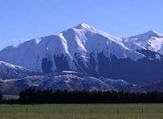
Skiing in New Zealand,The Canterbury Southern Alps are the longest and highest mountain range in New Zealand. Amongst these harsh, daunting peaks you will find volcanic lakes, ancient forests, greenstone rivers, blue-ice glaciers and wide alluvial valleys that make up an area of amazing natural beauty, containing four national parks and a range of top quality ski areas.

Ski
The Southern Alps (Ngā Pukemāeroero in Maori) include 18 ski areas, all within a few hours drive from Christchurch City. The New Zealand season runs from approximately mid June and finishes in the spring in October. Average base depth on the Southern Alps ski fields is around 104cm.

Hike
Kiwis call it "tramping" - it's about putting a pack on your back and enjoying the freedom to explore New Zealand's backcountry. Whether you call it bushwalking, hiking or trekking, it's a great way to see more of New Zealand - and Canterbury is the best place to start. Skiing, Hiking, Biking.

Bike
Canterbury itself is an amazing region for cyclists, with hundreds of kilometres of trails waiting to be explored. In the national parks, however, generally mountain biking is limited to the formed roads. However, there are a series of mountain biking events around the Alps that are popular and attract hundreds of keen cyclists each year, from around Lake Tekapo, to a ski/run/bike multisport race held annually at Mt Hutt.

Christchurch city, the Gateway to the Antarctic

Cruise ship to Artarctica
Christchurch New Zealand has a history of involvement in Antarctic exploration – both Robert Falcon Scott and Ernest Shackleton used the port of Lyttelton as a departure point for expeditions, and there is a statue of Scott, sculpted by his widow, Kathleen Scott, in the central city.
Within the city the Canterbury Museum preserves and exhibits many historic artifacts and stories of Antarctic exploration.
Christchurch International Airport serves as the major base for the Italian and United States Antarctic programs as well as the New Zealand Antarctic programme.

The International Antarctic Centre provides both base facilities and a museum and visitor centre focused upon current Antarctic activities. The United States Navy and latterly the United States Air National Guard, augmented by the New Zealand and Australian air forces, use Christchurch Airport as take-off for the main supply route to McMurdo and Scott Bases in Antarctica. The Clothing Distribution Center (CDC) in Christchurch, has more than 140,000 pieces of extreme cold weather (ECW) gear for issue to nearly 2,000 U.S. Antarctic Program (USAP) participants in the 2007-08 season

New Zealand beaches, native forest and wildlife encounters: Travel

Finds Hotel and motel, louges for vacantion and Holiday in New Zealand.
Visit The Abel Tasman National Park: this national park is New Zealand's smallest, but it's perfectly formed for relaxation and adventure. Visitors love the way the Abel Tasman National Park mixes physical exertion with beach life. Bursts of hiking or kayaking are punctuated by sun bathing, swimming and sedate snorkelling around the characteristic granite outcrops. The strip of coast that falls within the boundaries of the park is highly distinctive. Granite and marble formations fringe the headlands, which are cloaked in regenerating native forest. Inviting sandy beaches fill the spaces between trees and tide line. Crystal clear streams tumble down mossy valleys to join the ocean. At Te Pukatea Bay, a perfect crescent of golden sand, a walking track leads up Pitt Head to an ancient Maori pa (fort) site. Native wildlife is an essential part of the scenery. Tui and bellbird song fills the forest; shags (cormorants), gannets and little blue penguins dive for their dinner; fur seals lounge on the rocks around the edge of Tonga Island.Activities: The coastal track and other walksClassed as one of New Zealand's 'Great Walks', the Abel Tasman's Coastal Track takes between 3 and 5 days to complete. It climbs around headlands and through native forest to a series of beautiful beaches. The track is walkable at any time of the year. Expect to see lots of other walkers and day visitors in summer. For a different view of the park, there are inland tracks that lead up to the dramatic karst landscape of Takaka Hill. Try the Sea kayaking, A number of kayaking companies run guided tours from Marahau and Kaiteriteri. If you'd rather be independent, you can rent kayaks and stay at campsites, huts or lodges within the park - just as you would if you were hiking.
Accommodation in Abel Tasman National Park NZ, with comfortable private lodges at Awaroa and Torrent Bay. The Department of Conservation provides four 'Great Walk' hikers' huts along the Coastal Track and four standard huts on the inland tracks. These huts have mattresses, water and toilets - some have cooking facilities. Campsites with water, toilets and fireplaces are also available within the park... Hotel Motel Louges and Various types of accommodation can be found at the settlements of Marahau and Kaiteriteri at the southern end of the park, and Totaranui at the northern end.

Vacantion to New Zealand

New Zealand hotel motel Accommodation, luxury lodges backpackers accommodation Youth Hostels.
National Parks Travel:
Whanganui National Park New zealand, the park encloses the wild upper and middle reaches of the Whanganui River, which is New Zealand's longest navigable waterway. the Park Beginning beneath the shadow of the central plateau's giant volcanoes, with long river winds its way to the Tasman Sea through an endless procession of forested valleys and hills. The park has a very distinctive landscape of river valley systems with steep slopes, razor-sharp ridges and an almost complete cover of native lowland forest. The park is at the centre of a large sedimentary basin, so the rocks are mostly mudstones, easily sculpted by the river into fascinating shapes. The Whanganui park is at the centre of a large sedimentary basin, so the rocks are mostly mudstones, easily sculpted by the river into fascinating shapes.See the bird, there are large numbers of kereru (native pigeon), piwakawaka (fantail), tui, toutouwai/ robin , riroriro/ grey warbler and miromiro/ tomtit . The beautiful whio (blue duck) is the target of a Department of Conservation recovery plan, and numbers are increasing steadily. You can also hope for sightings of kaka and yellow-crowned parakeets. At night it's possible to hear the call of the North Island brown kiwi.The Activities: Whanganui Journey is classed as one of New Zealand's 'Great Walks'. The 145 kilometre river trip runs from Taumarunui to the village of Pipiriki, taking about five days to complete by canoe or kayak. Jet boats operate from both ends of the Whanganui River, providing visitors with rewarding day trips into the heart of the park. Jet boat is the easiest way to access the famous 'Bridge to Nowhere', a haunting relic from the past. The Matemateonga Track is one of the most popular long walks in the park. It follows an old Maori trail and takes about four days to complete.
Accommodation Around the park, Finds Hotel Motel, various types of overnight accommodation can be found in Taumarunui, which is close to the northern boundary of the park. The city of Wanganui provides a wide choice of accommodation at the southern end. There are a few bed and breakfast establishments between Wanganui and Pipiriki.

Travel To New Zealand and Australia